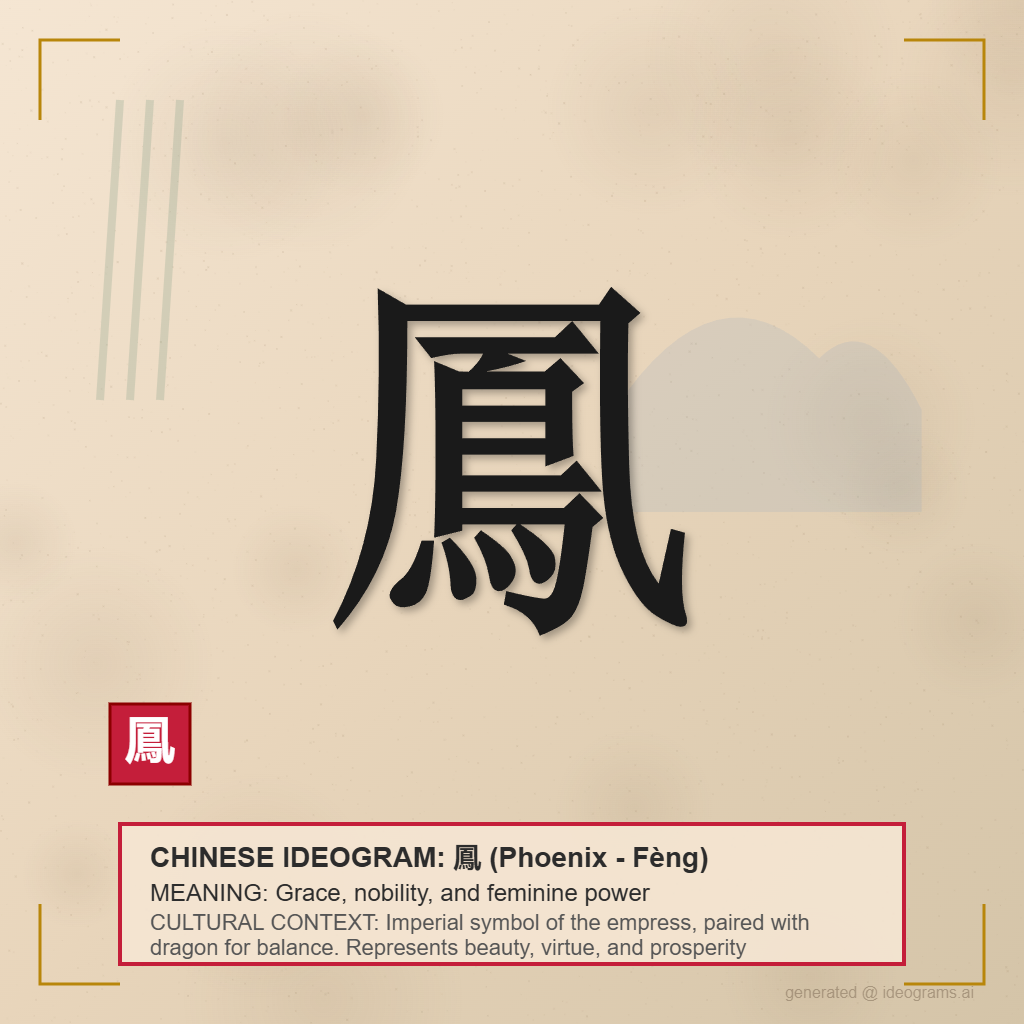
Core Meaning
鳳 (Fèng) is the Chinese phoenix, representing grace, virtue, and noble beauty. Unlike the Western phoenix that rises from ashes, the Chinese phoenix (Fenghuang) symbolizes the union of yin and yang, often paired with the dragon.
The phoenix represents the empress and feminine power, while the dragon represents the emperor and masculine power. Together they symbolize marital harmony and balance. The phoenix is also associated with the sun, summer, and the color red.
Cultural Significance
- Imperial Symbol: Represents the empress and feminine authority
- Yin Energy: Balances the dragon's yang energy
- Virtue & Grace: Symbolizes high moral character and beauty
- Marital Harmony: Dragon and phoenix together represent perfect marriage
Character Breakdown
The character 龍 is a complex pictograph depicting the dragon's form:
Standing upright, commanding
Physical form, body
Serpentine mythical creature
The traditional form depicts: "a powerful, serpentine creature with claws, capable of flight and controlling the elements."
Common Usage & Phrases
- 鳳凰 (fèng huáng) - Phoenix (full name)
- 龍鳳呈祥 (lóng fèng chéng xiáng) - Dragon and phoenix bring good fortune
- 鳳毛麟角 (fèng máo lín jiǎo) - Phoenix feather, unicorn horn (extremely rare)
- 鳳冠霞帔 (fèng guān xiá pèi) - Phoenix crown (bride's headdress)
- 鳳舞龍飛 (fèng wǔ lóng fēi) - Phoenix dances, dragon soars
- 有鳳來儀 (yǒu fèng lái yí) - Phoenix comes with grace
- 鳳凰涅槃 (fèng huáng niè pán) - Phoenix reborn from ashes
"鳳凰于飛,翙翙其羽"
"The phoenix flies, flapping its wings gracefully."
— Book of Songs (詩經)
Cultural Context & Philosophy
In Mythology: The Fenghuang is composed of features from multiple birds, representing the union of all creatures. It appears only in times of peace and prosperity.
In Weddings: Dragon and phoenix motifs are essential wedding decorations, symbolizing the harmonious union of bride and groom, yin and yang.
Imperial Symbolism: While the dragon represented the emperor, the phoenix represented the empress. Phoenix imagery adorned the empress's clothing and chambers.
Modern Usage: Phoenix symbols remain popular in Chinese art, architecture, and celebrations, representing beauty, grace, and auspicious occasions.
Frequently Asked Questions
Common questions about the Phoenix ideogram 鳳:
Related Ideograms
Explore other Chinese characters related to balance and virtue:
✨ Create Your Own Phoenix Ideogram Art
Use our AI prompt library to generate stunning Chinese ideogram images with tools like Midjourney, DALL-E, and Stable Diffusion
Explore AI Prompts