Core Meaning
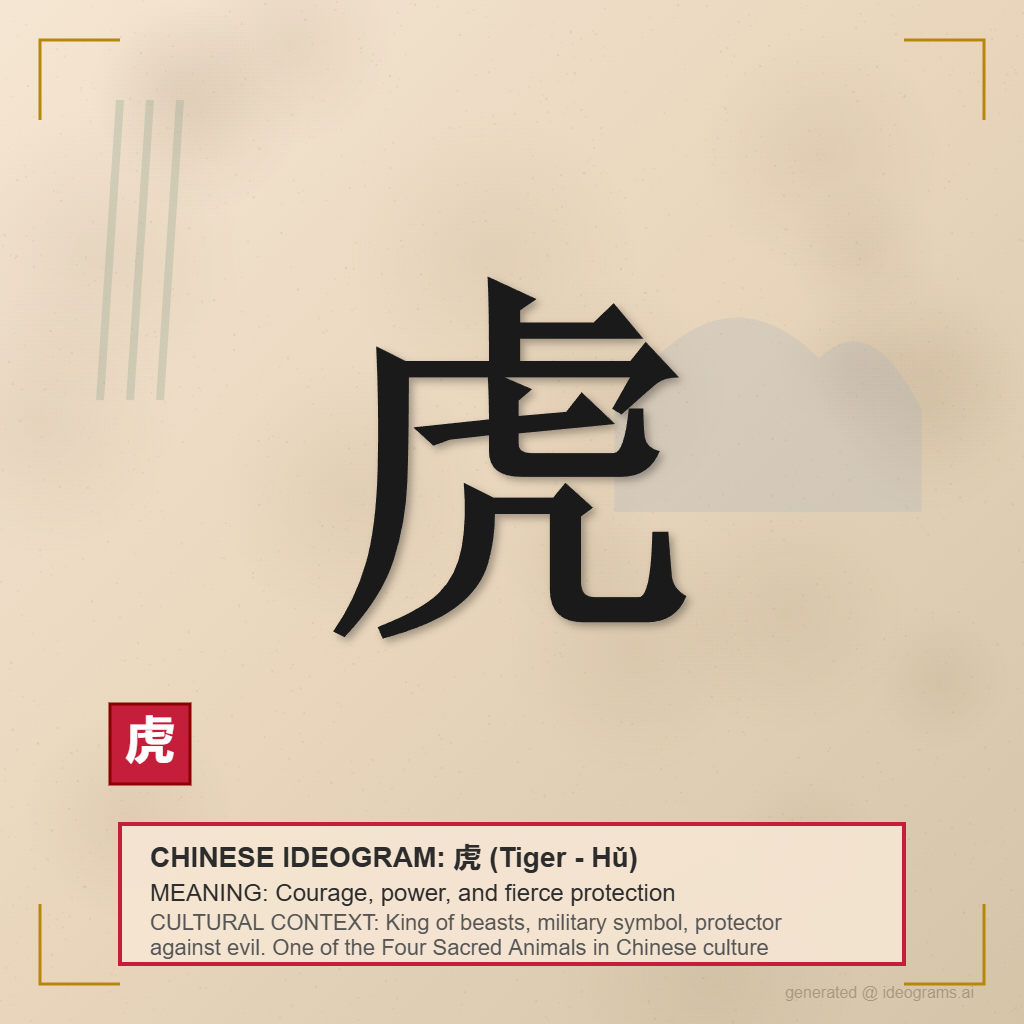
虎 (Hǔ) represents courage, strength, and fierce protection. The tiger is one of the four sacred animals in Chinese culture, symbolizing military prowess and bravery.
Tigers are seen as the king of beasts and powerful protectors against evil spirits. The white tiger is one of the Four Symbols representing the west and autumn. Tigers embody courage in battle and the strength to overcome obstacles.
Cultural Significance
- Military Symbol: Represents military strength and warrior courage
- Protection: Guards against evil spirits and negative energy
- King of Beasts: Supreme among terrestrial animals
- Four Symbols: White tiger represents the west direction
Character Breakdown
The character 虎 is a stylized pictograph of a tiger:
Represents the head and stripes
Standing on hind legs
The complete fierce tiger
The traditional form is a vertical depiction of a tiger, emphasizing its open mouth, sharp teeth, and striped coat.
Common Usage & Phrases
- 虎虎生威 (hǔ hǔ shēng wēi) - Full of vigor and vitality
- 如虎添翼 (rú hǔ tiān yì) - Like adding wings to a tiger (even more powerful)
- 龍爭虎鬥 (lóng zhēng hǔ dòu) - Dragon and tiger fight (fierce competition)
- 虎父無犬子 (hǔ fù wú quǎn zǐ) - Tiger father has no dog sons
- 虎年 (hǔ nián) - Year of the Tiger
- 生龍活虎 (shēng lóng huó hǔ) - Like a lively dragon and tiger
- 騎虎難下 (qí hǔ nán xià) - Hard to get off a tiger (trapped in situation)
"不入虎穴,焉得虎子"
"How can you catch tiger cubs without entering the tiger's den?"
— Ancient Chinese Proverb
Cultural Context & Philosophy
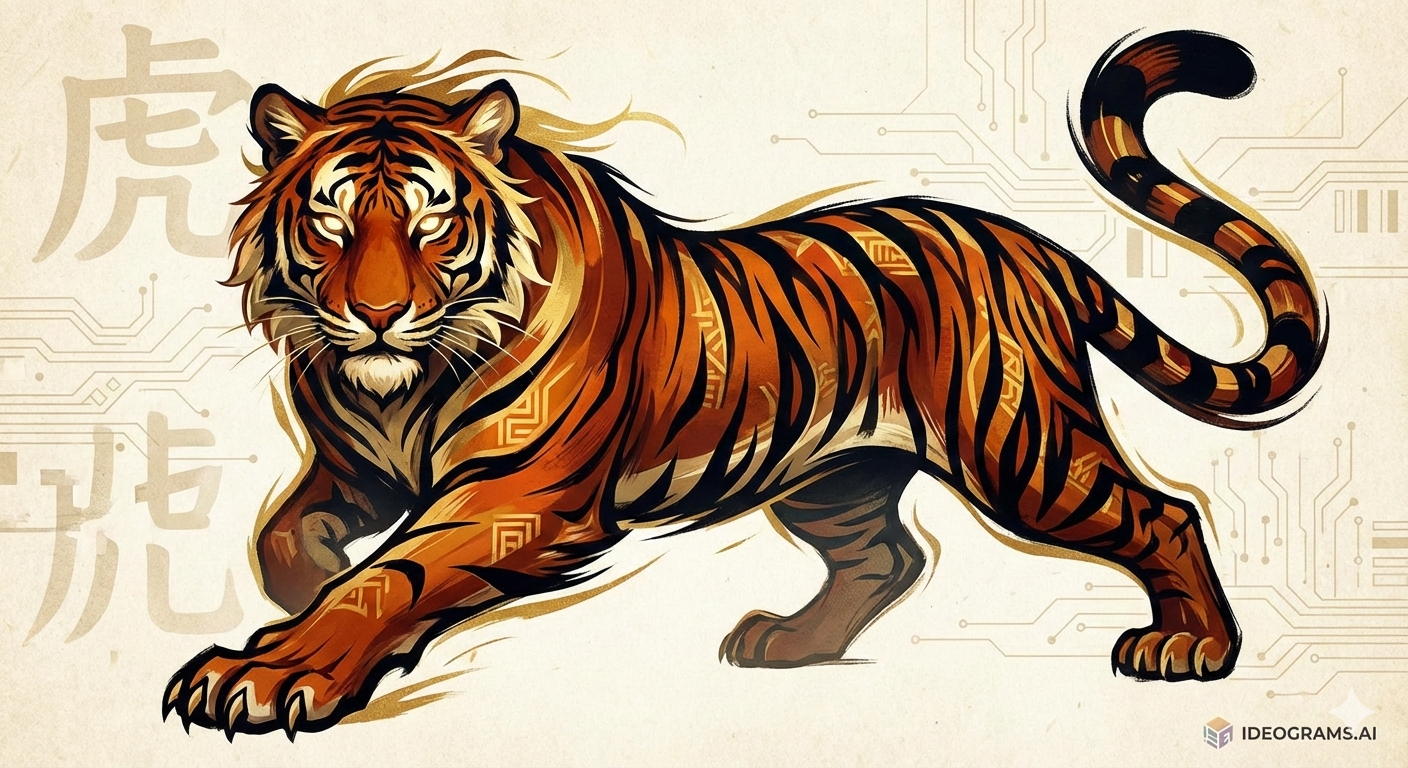
In Mythology: Tigers are revered creatures representing yang energy and military prowess. Tiger generals were feared warriors and appears in countless legends and stories.
In Feng Shui: The tiger represents yin-yang balance paired with dragon for protection. Tiger imagery wards off evil spirits and is used to protect homes and businesses.
Year of the Tiger: Third sign in the Chinese zodiac sign. Tiger year people are said to be brave and competitive as parents want their children born under this lucky sign.
Tiger Talisman: Used historically as military command tokens during ancient China, split between general and emperor for authorization, bringing good luck and prosperity to communities.
Frequently Asked Questions
Common questions about the Tiger ideogram 虎:
Related Ideograms
Explore other Chinese characters related to balance and virtue:
✨ Create Your Own Tiger Ideogram Art
Use our AI prompt library to generate stunning Chinese ideogram images with tools like Midjourney, DALL-E, and Stable Diffusion
Explore AI Prompts