Core Meaning
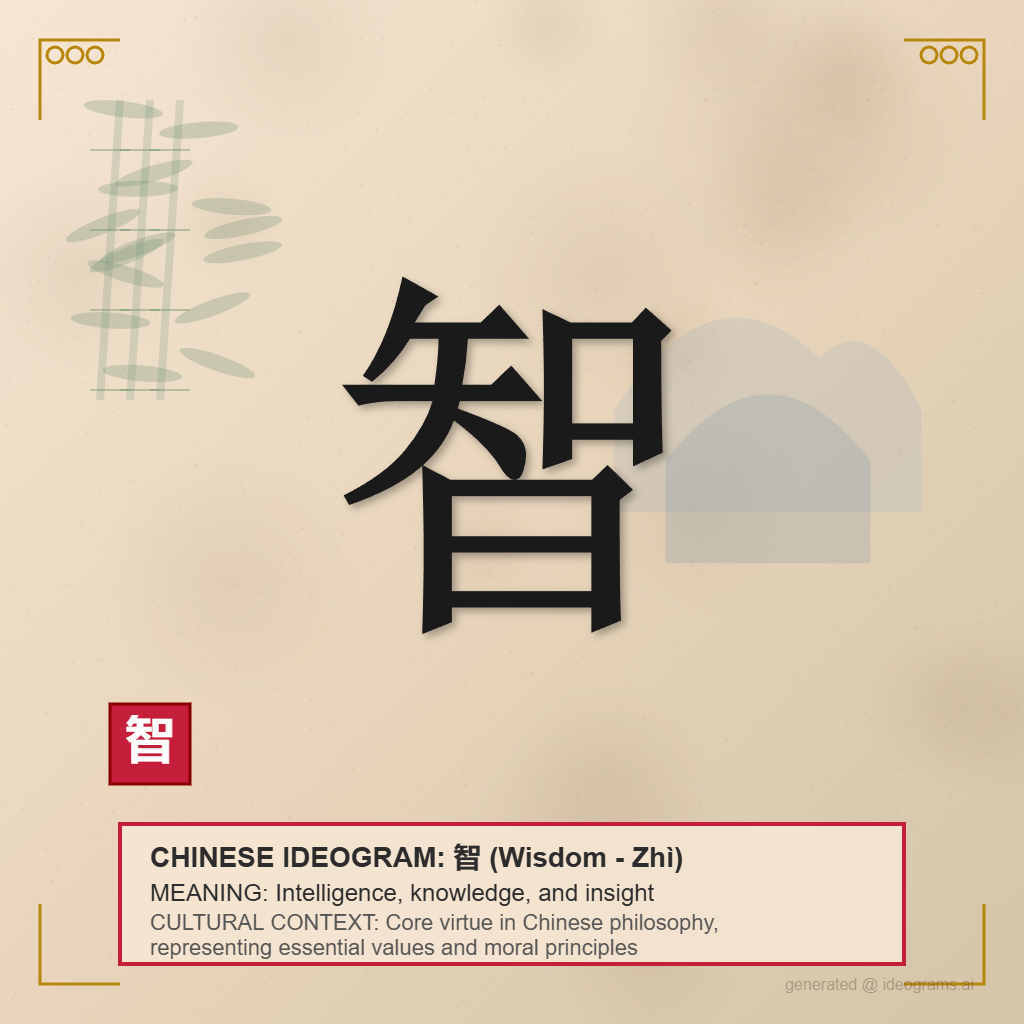
智 (Zhì) represents wisdom, intelligence, and the ability to make sound judgments. It encompasses both knowledge and the practical application of that knowledge to navigate life wisely.
In Confucian thought, wisdom is one of the cardinal virtues alongside benevolence, courage, and righteousness. True wisdom involves understanding both the world and oneself, making ethical decisions, and acting with foresight.
Cultural Significance
- Confucian Virtue: One of the four pillars of moral character
- Strategic Thinking: Associated with military strategy and planning
- Self-Knowledge: Understanding one's limitations and strengths
- Practical Application: Not just knowledge, but using it wisely
Character Breakdown
The character 智 combines components that illustrate wisdom:
Knowledge, awareness
Clarity, illumination
The combination suggests: "knowledge illuminated by clarity, leading to wise understanding."
Common Usage & Phrases
- 智慧 (zhì huì) - Wisdom, sagacity
- 智者 (zhì zhě) - Wise person, sage
- 智力 (zhì lì) - Intelligence, intellect
- 智謀 (zhì móu) - Strategy, resourcefulness
- 明智 (míng zhì) - Sensible, wise, judicious
- 智商 (zhì shāng) - IQ, intelligence quotient
- 機智 (jī zhì) - Quick-witted, resourceful
"知人者智,自知者明"
"Knowing others is intelligence; knowing yourself is true wisdom."
— Laozi (老子), Tao Te Ching
Cultural Context & Philosophy
In Confucianism: Wisdom involves moral judgment and understanding the way of heaven. It's inseparable from virtue and guides righteous action.
In Taoism: True wisdom comes from understanding the natural way (Tao) and acting in harmony with it, not forcing things against their nature.
Military Strategy: 智 is central to Sun Tzu's Art of War - knowing when to fight and when to retreat, understanding both yourself and your opponent.
Modern Education: Emphasized in Chinese education as both academic excellence and practical life skills, combining theoretical knowledge with real-world application.
Related Ideograms
Explore other Chinese characters related to balance and virtue:
✨ Create Your Own Wisdom Ideogram Art
Use our AI prompt library to generate stunning Chinese ideogram images with tools like Midjourney, DALL-E, and Stable Diffusion
Explore AI Prompts